Systems for Self Care
As business owners, our internal world always impacts our business. This is why it’s essential to make sure you’re building rituals and habits that fill your cup. This doesn’t have to be super complicated or rigid. Despite what everyone online says, you don’t need a special face mask, meditation app, or morning routine to take care of yourself. True self-care is less about what you do, and more abouthow good you are at listening to yourself. You could do the exact morning routine you saw on TikTok forever, but if it’s not actually bringing you more joy and energy, it’ll just be another task you check off on your to-do list. That’s why there are so many different methods and tools in the wellness world, because everyone is different! We all need different things at different times in our lives.
That said, there are a few universal areas that need our attention. If you’ve spent any time in the wellness space, you’ve probably seen a wellness wheel. That looks something like this.
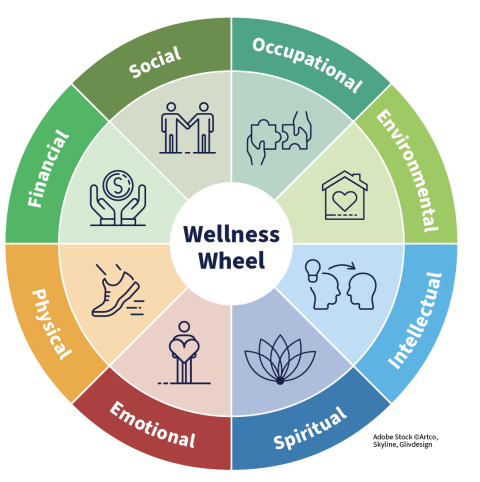
The wellness wheel is important because it’s a visual reminder of the different areas of life that need our attention in order to feel balanced and healthy. When we ignore any area for too long, we tend to see issues pop up everywhere. You’re probably thinking, this is all great, Mckinley, but life is busy!
How do we actually care for all these areas in our life?
By not trying to give them all equal attention all the time, and flowing with what we need. One of the main issues I run into is actually figuring out what will fill my cup with the limited time I have. To avoid this, I used to just do the same stuff every day. The problem with being so rigid is that when I didn’t have time to do all of it, I wouldn’t do any of it. Plus, I would stay so committed to the specific routine I thought would fill my cup that it became more of an obligation than something that truly brought me joy. Lately, I’ve been practicing a more fluid approach to self-care by using a self-care spreadsheet!
The first step I took was going through the different areas of wellness and writing down the activities that I actually enjoy and fill up each cup. Some examples include:
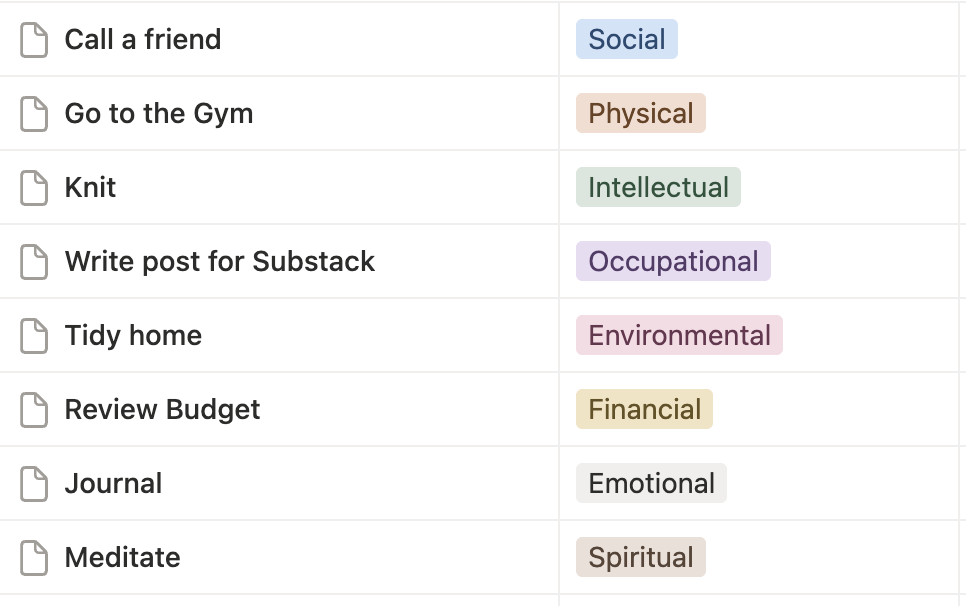
Then I categorized each activity by the factors that most affect my decision. For me, those areas are time commitment, location, difficulty, and cost.
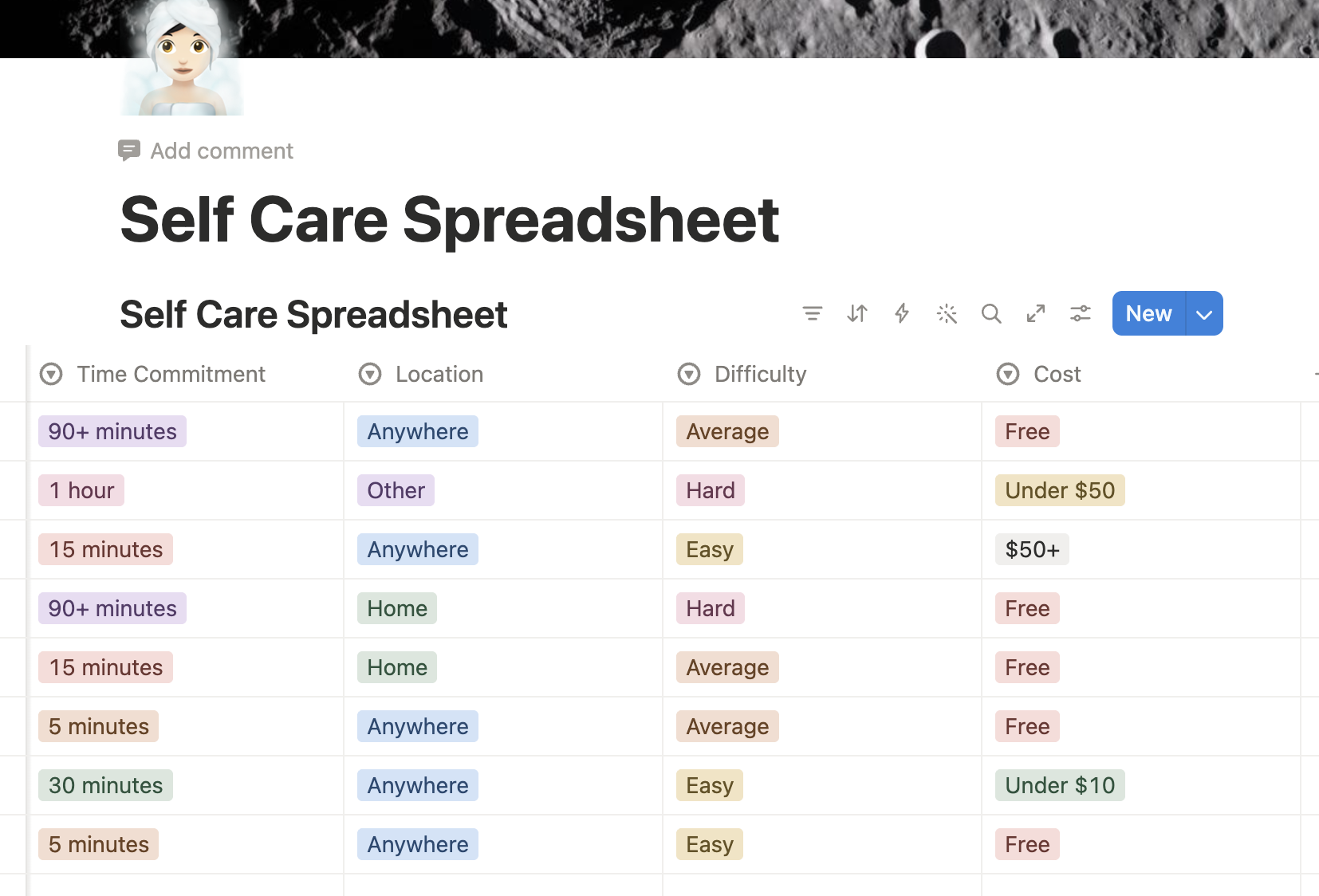
Want to create your own spreadsheet? Here’s a link to the template!
The last piece is figuring out what to do and when. There are a few non-negotiables I do my best to include every day. Right now, my non-negotiables are getting 8+ hours of sleep, eating 3 meals, and going for a walk with my dog. Everything else fits into my life depending on what I need that day. I always make some time at the beginning and end of my day to do at least one activity on the spreadsheet. The activities I do each day are a little different, which keeps them feeling fresh and nourishing.
But what about when it feels like every cup is empty?
Most business owners I work with have put far too much energy into their business for far too long. Their creative and occupational cups are getting too much attention, while the others are empty. This is where burnout comes in. When it feels like every cup is empty, it’s time to take the pressure off, reconnect with your intuition, and get your business boundaries in order.
Last year, I was in exactly this place. I was living under constant stress and working all the time. I ended up having to take two weeks off because I got a viral infection that paired with my eye condition to wreak havoc on my body. I knew that my stress was to blame, and I had to make a change. This is what prompted me to begin my mentorship journey with Alexia Landa. One of the first things she told me to do was to reduce the percentage of energy I was giving to my business from 100% to 30%. At the time, this felt crazy. But I knew I needed a change, so I tried it, and... nothing bad happened. In fact, I was actually able to enjoy the time I spent on work and on life.
A few things had to shift in my business systems in order to do this.
I had to rework my work boundaries and actually follow them. If you want to understand more about what this looked like, check out my articles on Time Management (Part 1 | Part 2). Clarifying my availability and expectations with clients helped me reduce the time and energy spent working.
I had to take the pressure off. I had to make an internal agreement with myself that nothing is urgent. Yes, I want to progress my business forward, but it doesn’t all have to happen right now. Yes, a client’s request is important, but it’ll be better for me to handle it when I have the energy, rather than pushing through just to tick it off. This mental boundary helped me to actually follow the schedule I set for myself.
I had to reconnect with my intuition. Instead of treating everything as a to-do to check off my list, I started treating each day as a menu of options. What projects did I want to work on? What self-care activities did I want to do? Who did I want to talk to? I am naturally drawn to different things each day, and it’s okay to trust that.
It may not seem like it, but this is all systems work. I had to shift the structure from one of rigidity and “shoulds” to one that allowed me to flow. By doing so, I was finally able to hear myself again, and actually fill my cup. I encourage you to take some time this Cancer season to evaluate your self-care systems, build your personal self-care spreadsheet, and create more space in your life for flow.